This Exchange can be done through a licensing agreement as a partnership to authorize to use the license of the technology in exchange for an agreed payment (fee or royalty).
|
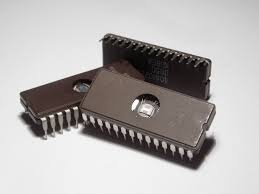
INTEGRATED CIRCUIT WITH PHOTONIC ELEMENTSTech for Transfer TTO 16-12-2015 An integrated circuit with electronic and photonic elements comprising electronic processing layers and adjacent interconnect layers with photonic elements located within them. The photonic elements comprising optical waveguides can be configured as optical logic gates to perform logic operations upon reception of optical signals. Optoelectronics Waveguides Tell me more |
|
TRANSFORMATION OF A PSEUDOSCOPIC IMAGE TO AN ORTHOSCOPIC IMAGE FOR 3D VIEWINGTech for Transfer TTO 16-12-2015 This invention presents a smart pseudoscopic to orthoscopic conversion (SPOC) protocol and a method for using the SPOC protocol for 3D imaging. The method allows full control over the optical display parameters in Integral Imaging (InI) monitors. From a given collection of elemental images, a new set of synthetic elemental images (SEIs) ready to be displayed in an InI monitor can be calculated, in which the pitch, microlenses focal length, number of pixels per elemental cell, depth position of the reference plane, and grid geometry of the microlens array (MLA) can be selected to fit the conditions of the display architecture. Optical Imaging and Processing Tell me more |
|
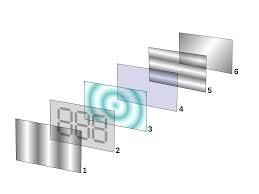
LIQUID CRYSTAL CELLS WITH A VARIABLE RESULTING PRE-TILT ANGLETech for Transfer TTO 16-12-2015 This invention presents liquid crystal cells and lenses having a variable resulting pre-tilt angle and a gradient of head-on optical retardation. The pre-tilt angle of the liquid crystal refers to the number of degrees that the liquid crystal molecules in the cell adjacent to the substrate deviate from the plane of the substrate when no electric field is present or applied to the cell. The term “resulting pre-tilt angle” means the pre-tilt angle of the liquid crystal material after the polymer network has been formed. Diffractive Optics Tell me more |

|
HIGH-EFFICIENCY LUMINESCENT GLASS-PHOSPHOR MATERIALS FOR PHOTONIC APPLICATIONSTech for Transfer TTO 16-12-2015 A light emitting composite material made of phosphor suspended in a glassy material. The refractive index of the phosphor is approximately equal to the refractive index of the glass, increasing the efficiency of light emission. This composite material can be used in phosphor-containing LEDs, solid-state laser diodes, and as a luminescence collector. Light sources Tell me more |
|
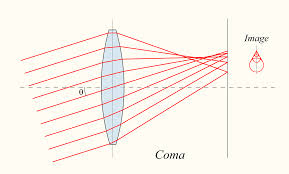
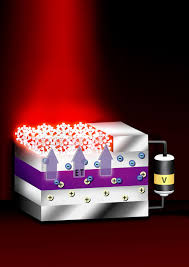
AXICON LENS ARRAY WITH LARGE DEPTH-OF-FIELD AND FOCUSING RANGETech for Transfer TTO 16-12-2015 An optical lens array for imaging and illumination applications is provided. The lens array comprises three conical surface lenses or axicons positioned along the same optical axis. The third axicon provides an objective lens to a focal region and is positioned at a fixed location in the array. The distance between the first and second axicons can be altered to control the position of the focal region defined by the depth of field for imaging applications and depth of focus for illumination applications of the third axicon. Optical Components & Devices Tell me more |
|
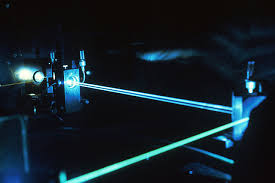
OPTICAL TESTING OF A MULTI QUANTUM WELL SEMICONDUCTOR DEVICETech for Transfer TTO 16-12-2015 A pump light pulse generates a strain pulse in a sample that includes quantum wells. The strain pulse triggers a change in an optical property of the sample producing a signal. The signal is measured using a probe light pulse which is delayed in relation to the pump light pulse. Parameters of interest of the sample, including the quantum wells, can be deduced from the characteristics of the signal. For discerning between various components of the stress in the quantum wells, a lead pump pulse preceding the pump light pulse may also be used. A system for the application of such methods is also disclosed. Quantum Optics Semiconductors Tell me more |
|
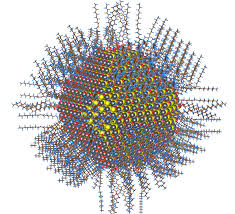
REFLECTION SWITCH BY LASER BEAM INTERSECTION AT THE POINT OF REFLECTIONTech for Transfer TTO 16-12-2015 The present invention provides a method of changing the intensity of a reflected beam by directing a second beam of light at the point of reflection. The method includes: (a) a substrate bearing a film of a reflective material; (b) directing a first beam of light at the reflective material so as to create a reflecting beam; (c) directing a second beam of light at the reflecting point so as to alter the amount of light in the reflecting beam, and (d) detecting the change in the amount of light in the reflecting beam. The invention also includes an apparatus for changing the amount of reflected light and measuring that change, as well as related apparatus for a pulsed optical signal. Lasers Optical Engineering Tell me more |
|
THREE-DIMENSIONAL SILICON COLLOIDAL PHOTONIC CRYSTALS FOR MICROPHOTONIC DEVICESTech for Transfer TTO 16-12-2015 Synthetic Silicon colloidal photonic crystal was built using a new synthesis process based upon Micromolding in Inverse Silica Opals (MISO). It presents a novel topology with a full photonic band gap, making it useful as a component of all-optical microphotonic crystal devices, circuits and computers. Optical Components & Devices Photonic Crystals Semiconductors Tell me more |
|
LUMINESCENCE-BASED SPECTROMETERTech for Transfer TTO 16-12-2015 A method for measuring a scintillation property of a sample by directing ionizing radiation towards the sample, inducing it to produce an emission. The method also includes acquiring a spectral luminescence of the produced emission, including a plurality of luminescence intensities at corresponding emission wavelengths. The scintillation property of the sample can then be determined based on the acquired spectral luminescence. Optical measurement systems & Sensors Tell me more |
|
PHOTONIC INTEGRATED WAVEGUIDES WITH LOW ABSORPTION LOSSTech for Transfer TTO 17-12-2015 Asymmetric twin waveguides (ATG) present a promising method for optoelectronic integration by needing only a single epitaxial growth step and a simple fabrication process for even the most complex photonic integrated circuit (PIC) design. This invention provides an ATG structure that employs quantum-well intermixing (QWI) to reduce absorption loss normally encountered in the movement of light between waveguides. QWI relies on the mixing of the quantum well and barrier materials of an active region, resulting in an alloy whose bandgap is intermediate between that of the wells and barriers. Quantum Optics Waveguides Tell me more |