A partner in form of Joint research. This is an agreement on cooperation between the parties on research and development on an equal level (Synergy and international partnership, EU H2020 funding application).
|
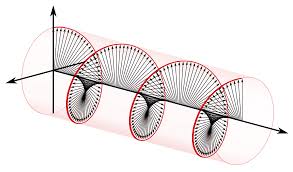
PHOTON PAIR SOURCE CONTROLLED BY QUANTUM DOTSTech for Transfer TTO 18-12-2015 The invention presents a method for the production of a photon pair source to generate entangled photon pairs, where the operational behaviour of the source is determined by adjusting the fine structure splitting of the excitonic energy level of one or more quantum dots. The fine structure splitting can be adjusted by depositing the quantum dot(s) on a particular crystal face of a semiconductor substrate. Quantum Optics Semiconductors Quantum Dots Tell me more |
|
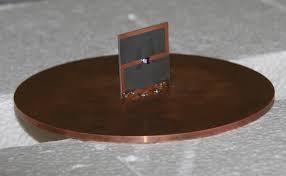
WAVEGUIDE-BASED PHOTONIC INTEGRATED COMPONENT PATTERNED WITH OPTICAL ANTENNA ARRAYSTech for Transfer TTO 18-12-2015 Integrated photonic device comprising an array of antennas on an optical waveguide to control the propagation of light through the waveguide and realize waveguide mode conversion and on-chip nonlinear optical processes. Non-Linear Optics Semiconductors Waveguides Tell me more |
|
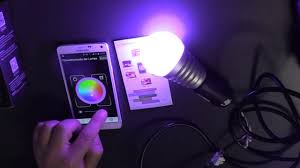
LIGHTING FOR AUTOMATED, CONTROLLABLE ILLUMINATION LEDSTech for Transfer TTO 19-12-2015 Lighting utilizes highly energy-efficient and controllable solid-state light sources both to illuminate a defined space and facilitate optical wireless communication among electronic devices within that space. Light sources Optical Engineering Tell me more |

|
THIN-FILM SOLAR CELL ENHANCEMENTTech for Transfer TTO 19-12-2015 This technology is an enhancement for thin film solar panels that increases the produced photocurrent up to a factor of ten. Photovoltaics Thin-Film Materials Tell me more |

|
SELF CLEANING SOLAR PANELSTech for Transfer TTO 19-12-2015 Automatic method to maintain and clean solar panels. It uses an electrodynamic screen with a phased voltage to produce an electrostatic wave to transport dust off solar panels. Optical Engineering Photovoltaics Tell me more |
|
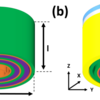
SPIRAL SOLAR CELL WITH ENHANCED ABSORPTIONTech for Transfer TTO 19-12-2015 This technology provides improved solar cells with an increase in light absorption of up to 90%. It is based on semiconducting two-dimensional materials which exhibit great mechanical flexibility and can be rolled into a stack to make a spiral solar cell. The multi-layered cylinder structure is responsible for enhanced light matter interaction and hence for raising the absorption. Photovoltaics Semiconductors Tell me more |

|
INTELLIGENT REAL-TIME FAULT DETECTION SYSTEM FOR SOLAR PHOTOVOLTAIC FARMSTech for Transfer TTO 19-12-2015 Innovative strategy for real-time fault detection in solar photovoltaic farms based on both Discrete Wavelet Transform and Fuzzy Logic Systems. This approach overcomes the weaknesses in current fuse based systems, like being ineffective when irradiance is low. Photovoltaics Tell me more |
|
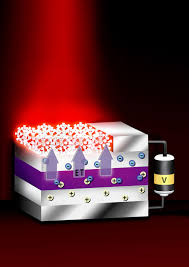
HIGH-EFFICIENCY QUANTUM DOT SOLAR CELLSTech for Transfer TTO 19-12-2015 New type of GaAs Intermediate Band solar cells where the Quantum Dots are placed outside the depletion region, enabling the capture of photons from a wider range of spectra and raising the efficiency of energy conversion significantly. Photovoltaics Quantum Dots Tell me more |
|
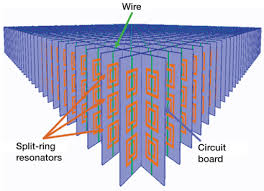
PHONONIC CRYSTAL RESONATORS FOR IMPROVED NANO-MECHANICAL ACOUSTIC DEVICESTech for Transfer TTO 19-12-2015 Phononic crystal wave structures, provide low signal loss and high quality factor in comparison to current micro/nano-mechanical acoustic devices. Optical Engineering Optical measurement systems & Sensors Tell me more |
|
OPTICAL FIBER 3D SOLAR CELLSTech for Transfer TTO 19-12-2015 In this invention, a dye-sensitized solar cell for harvesting solar energy is integrated with a piezoelectric nanogenerator for harvesting ultrasonic wave energy. The two energy harvesting approaches can work simultaneously or individually and can be integrated in parallel or in series for increasing the output current, voltage or power, respectively. The solar cell employs an optical fiber and semiconductor nanowires grown around the fiber. The fiber can transmit light, while the nanowires increase the surface area of light exposure. Light propagates through the fiber until it enters a nanowire where it reaches a photovoltaic element. Light in the fiber cannot escape until it interacts with a photovoltaic element, thereby increasing solar conversion efficiency. Fiber Optics Photovoltaics Tell me more |